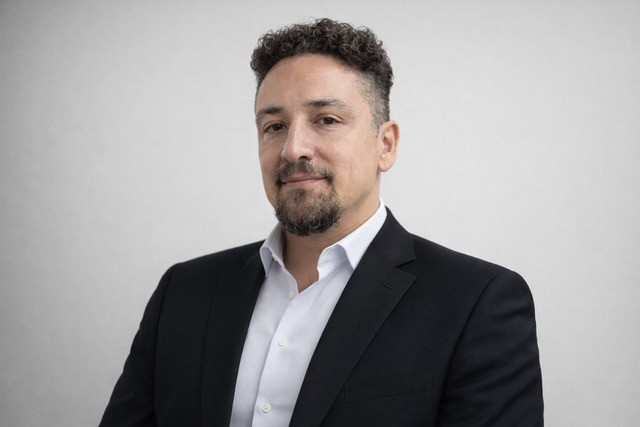
Daniele Rizzi
Daniele Rizzi is a BCBA and a Psychologist, working as Clinical Director for “la Casa dei Sogni-Fondazione Oltre le Parole Onlus”, a semi-residential center for adolescents and adults with ASD and intellectual disabilities in Pescara, central Italy. He serves as program coordinator and lecturer for A.B.A. post-university courses (VCS) at Consorzio Universitario Humanitas in Rome, teaching classes in experimental designs among other topics. He is involved as lecturer in the advanced training courses in A.B.A. and Autism organized by the Italian NIH (Istituto Superiore di Sanità). His main focus is in developing interventions for adolescents and adults using strategies based on Applied Behavior Analysis integrating a Quality of Life model. He presented scientific researches and gave talks both nationally and internationally, included participations as keynote speaker for the ABAI conference and Penn State Conference. He is father of 2 wonderful little boys.
Presentation at the ABA International Conference 2027
Interventions to increase adherence to medical procedures in individuals with autism and intellectual disabilities
Abstract:
Individuals with autism (ASD) and/or intellectual disabilities (ID) often show low level of adherence with medical procedures. Studies suggests that around one third of this population may show non-compliance during medical treatments (Gillis et al., 2009). Examples of medical procedure that may evoke problematic behavior can include, but are not limited to, taking medication (Raiff, Jarvis, & Dallery, 2016; Schiff, Tarbox, Lanagan, & Farag, 2011), MRI (Cox, Virues-Ortega, Julio, & Martin, 2017; Slifer, Koontz, & Cataldo, 2002), dental care (Szalwinski et al. 2019), blood drawn (Shabani & Fisher, 2006) etc. In presence of problematic behavior it may be necessary to opt for more intrusive procedures such as sedation (Lowe & Jedrychowski, 1987) or physical restraint (Klein & Norwak, 1999). Considering this scenario, it is of utmost importance to help people with ASD and ID to accept medical procedures, decreasing their indices of unhappiness and increasing acceptance during those situations. Some different interventions are used to address this concern, such as Differential Reinforcement, Stimulus Fading, Systematic Desensitization, Graduate Exposure etc. Some of those treatments may include an extinction component that, even if proved to be effective, may not be feasible or safe to implement during medical treatment. During this talk published studies and procedures related to increase adherence with medical interventions will be reviewed, with a focus on procedures that do not include an extinction component. Clinical examples and videos of the application of some of these procedures will be discussed as well.